7 Steps to Verify a Home Beauty Salon's Certifications
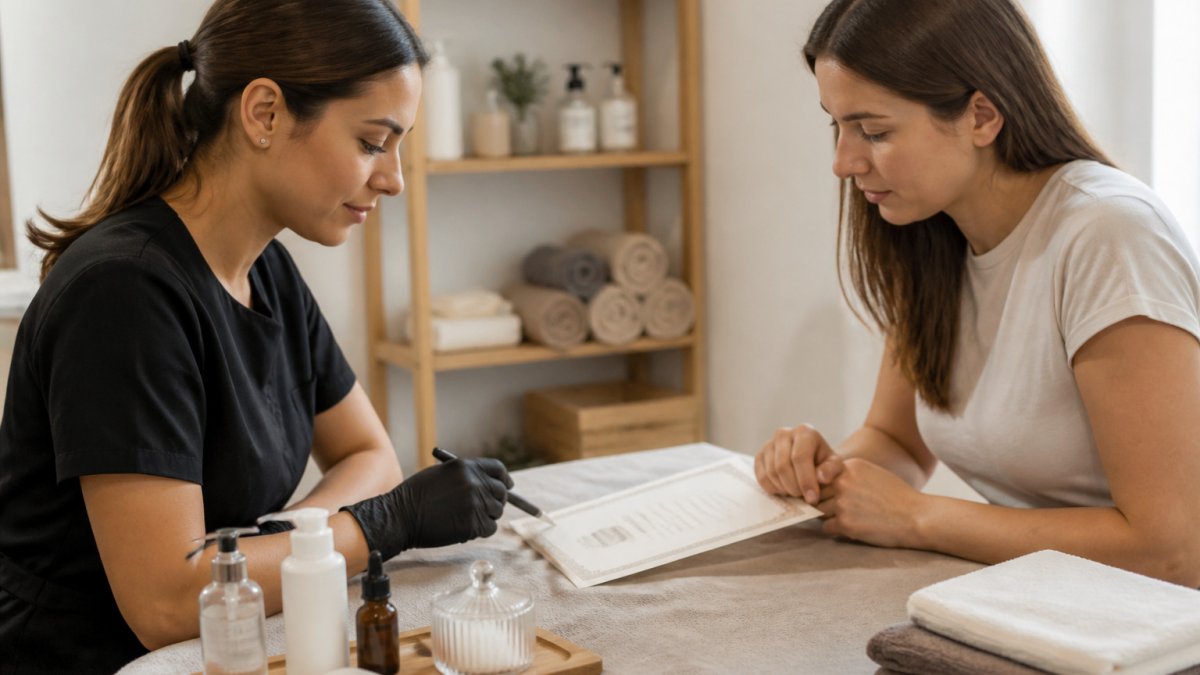
Quick Summary
To verify beauty certifications, ask the therapist for their full name, certificate details and trade licence, then contact the issuing institution yourself using its official phone number or email to confirm the certificate is genuine. A certificate alone does not prove a legal licence, so check whether the treatment requires one.
- A training certificate shows course completion, while a licence is a permission a regulator issues and can be checked against an official record.
- Ask for the full name, certificate numbers, licence number and the trade licence of the business in one message.
- Contact the issuing institution through its own website number, not one the therapist supplies, to confirm the certificate.
- Scan any QR code or verification link yourself and confirm it resolves to the institution's own domain.
- Check that the qualification covers the exact treatment booked, since a nail certificate may not cover massage.
Table of Contents
- What a Certificate Proves and What It Doesn't
- Step 1: Ask for the Therapist's Credentials Before Booking
- Step 2: Run a DHA Sheryan Licence Verification for Healthcare Staff
- Step 3: Run a Beauty Certificate Authenticity Check
- Step 4: Check That the Qualification Covers the Treatment
- Step 5: Use a Beauty Treatment Hygiene Checklist
- Questions to Ask a Home Beauty Therapist Before You Book
- Booking Your Next Home Ritual With Confidence
- Frequently Asked Questions
What a Certificate Proves and What It Doesn't
A certificate tells you that someone finished a course. It does not, on its own, prove they are legally allowed to work on you, so you should still verify beauty certifications before booking.
Before you check anything else, understand that difference. It shapes every step in this guide.
Training certificates versus legally required licences
A training certificate comes from a school, academy or course provider. It shows the person completed a set of lessons, sometimes with an exam.
A licence is different. It is a permission issued or recognised by a regulator, and it can be checked against an official record.
Watch out: a framed certificate on a wall is not proof of a licence. Ask for the licence number and check it yourself.
Step 1: Ask for the Therapist's Credentials Before Booking
Before you discuss treatments or pay a deposit, ask for a small, specific set of documents. The goal is not to interrogate the therapist, it is to confirm that the person arriving at your home is the person whose credentials you are checking, and that the business behind them is real.
The document set to request
Ask for these in one message so the request is clear and easy to answer:
- Full name as it appears on their Emirates ID, plus the name they trade under if it differs
- Emirates ID, you do not need the number, but ask them to confirm the name matches the name on their certificates
- Each certificate: course title, issuing institution, certificate number and date
A professional provider will have this ready. A provider who cannot produce a trade licence or who will only communicate through a personal social media account is telling you something important about how the business is run.
Confirm the legal identity behind the service
Home beauty services are often delivered by a sole practitioner, a small licensed business, or a therapist subcontracted by an app or agency. You should know which one you are dealing with, because it determines who is responsible if something goes wrong.
- Ask for the business name and trade licence number, and check that the name matches the booking confirmation and any receipt
- Ask whether the therapist is employed by the business or working as an independent contractor
- Ask for a receipt or invoice in the business name, not a personal name
If the therapist is subcontracted, ask which business holds the trade licence and whether that business has confirmed the therapist's credentials. Responsibility should sit with a named business, not with an anonymous booking chat.
Ask about insurance and home-visit permissions
A home visit is a business operating in your home, and the business should be able to tell you how it handles that. Ask directly:
- Does the business hold public liability insurance that covers treatments carried out in a client's home?
- Does the therapist carry their own professional indemnity cover, or is it held by the business?
- Are there any treatments the business will not perform in a home setting, and why?
You do not need to see the policy wording, but a provider who cannot say whether they are insured, or who has never been asked, is a provider whose risk you would be carrying. Insurance is not a certificate, but it is part of the same question: who is accountable if a treatment goes wrong in your home?
What a complete versus partial answer looks like
A complete answer names the institution, gives certificate numbers and dates, states whether a licence applies, and identifies the business and its trade licence. A partial answer gives first names only, sends a photo of a framed certificate with the issuer cropped out, or says 'I'm fully qualified' without documents. Partial answers are common, and they are not automatically dishonest, but they mean you cannot verify anything, and you should say so before booking.
Step 2: Run a DHA Sheryan Licence Verification for Healthcare Staff
Some beauty and wellness treatments overlap with healthcare, such as certain skin procedures or treatments involving medical equipment.
Use the official channels of the relevant authority to search the licence number you were given. Confirm the name, profession and status match what the therapist told you.
Not every home beauty treatment needs this check. Ask the provider directly whether any of their services fall under healthcare regulation.
Step 3: Run a Beauty Certificate Authenticity Check
Beauty training certificates are generally not held in a single public registry, so verification is usually a conversation with the issuing body. That does not mean you cannot verify beauty certifications. It means verification is a conversation with the issuing body, and you need to know what to ask and what a real answer looks like.
Confirm the issuer exists and is allowed to issue
Start with the institution named on the certificate, not the therapist. Search for the institution's official website and check three things:
- The institution has a physical address and a working phone number, not only a social media page
- The course named on the certificate appears in the institution's current course list
- The institution states whether it is approved by an education or qualifications authority, and names that authority
Training providers may be regulated by an education authority. A legitimate provider will tell you which authority recognises it and will not dodge the question. If the certificate carries an accreditation logo, ask the issuer to confirm the accreditation in writing, logos are easy to copy onto a fake certificate.
Ask the issuer to confirm the certificate, not the therapist
A therapist can show you a certificate; only the issuer can confirm it is genuine. Contact the institution through the phone number or email on its own website, not a number the therapist supplies, and ask:
- Did this person complete this course?
- What was the exact course title and duration?
- Was there an assessed practical component, or was it attendance-only?
- What is the certificate number, and does it match your records?
- Is the certificate still valid, or does it expire?
A short course completed online is not the same as a hands-on qualification with assessed practical work. Ask which one you are looking at. For treatments that involve skin, nails, lashes or waxing, the practical component matters more than the certificate's design.
Test QR codes and verification links yourself
Many modern certificates carry a QR code or a verification link. Scan it with your own phone and check where it actually goes. A genuine verification link should resolve to the issuing institution's own domain and show the holder's name, course and date. Warning signs include:
- A QR code that opens a generic image or a social media profile
- A verification page that asks you to enter the certificate number but returns the same result for any number
- A link that redirects to a domain unrelated to the institution
Watch for the fraud patterns that recur
A few patterns come up often enough to check for every time:
- Mismatched names. The name on the certificate does not match the name on the therapist's ID or the name they gave you.
- Borrowed credentials. The certificate belongs to someone else and is being shown as if it were the therapist's.
- Expired or superseded certificates. The course was completed years ago and the qualification has since lapsed or been replaced.
Step 4: Check That the Qualification Covers the Treatment
A qualification only matters if it covers what you are booking. A certificate in nail care does not automatically cover massage, and a general beauty diploma may not cover treatments on children.
Compare the course content against the service on your booking. Ask the therapist how their training applies to the exact treatment, especially for anything done on a child.
Common mistake: assuming "beauty therapist" means the person is qualified for every service on the menu. Check each treatment separately.
Step 5: Use a Beauty Treatment Hygiene Checklist
A certificate does not guarantee clean practice. Check the working method on the day of the visit.
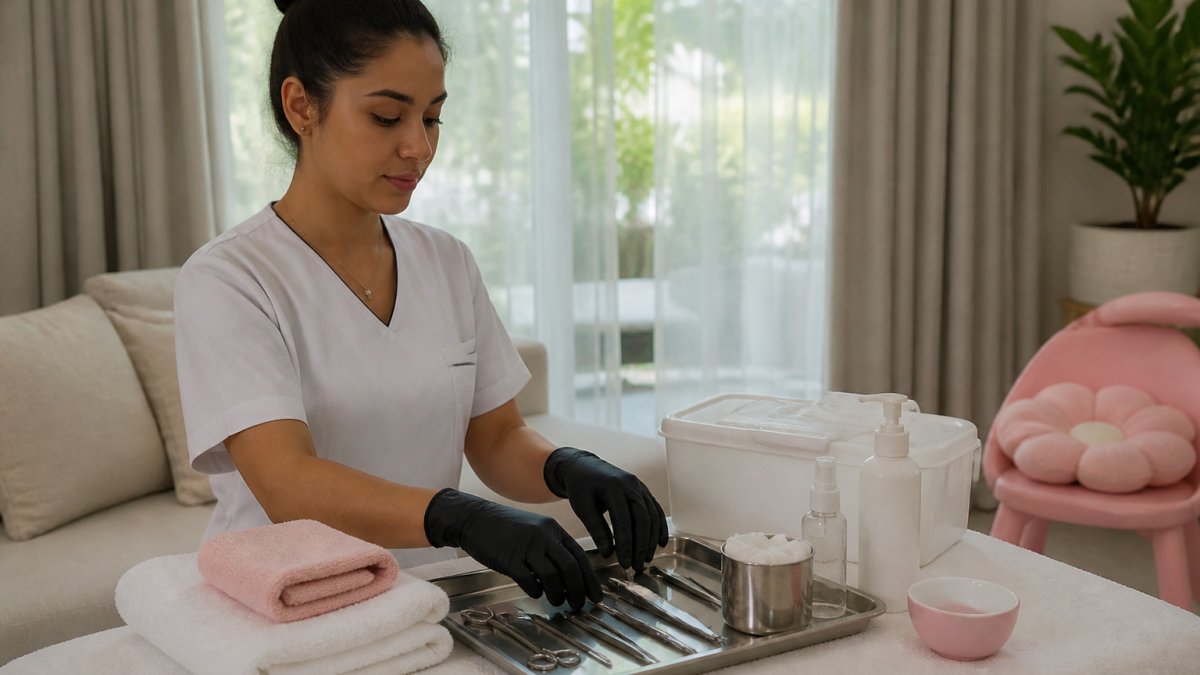
- Tools are cleaned and sterilised, or single-use items are opened in front of you
- Clean towels and disposable covers are used for each client
- The therapist washes or sanitises hands before and after the treatment
If something looks wrong, say so. A professional will explain what they do.
(Image: a calm home setting with a licensed beauty therapist arranging sterilised tools and fresh towels beside a child's chair.)
Clean practice on the day of the visit matters as much as paperwork.
| Check | What to look for | Why it matters |
|---|---|---|
| Tools | Cleaned and sterilised, or single-use items opened in front of you | Prevents cross-contamination between clients |
| Towels and covers | Clean towels and disposable covers for each client | Stops reuse between visits |
| Hand hygiene | Hands washed or sanitised before and after treatment | Reduces transfer of germs |
| Products | Sealed, labelled and within expiry date | Confirms product is safe to use |
| Children's products | Suitable for their age and skin | Protects sensitive skin |
Questions to Ask a Home Beauty Therapist Before You Book
Use these questions as a short script when you call or message a provider:
- What certificates do you hold, and who issued them?
- Can you share your licence number, if this treatment needs one?
- Which of your qualifications cover the treatment I am booking?
- How do you clean and sterilise your tools?
- Do you use single-use items for each client?
- Which products do you use, and are they suitable for children's skin?
- What is your cancellation and rescheduling policy?
A good provider will answer these clearly. Vague or defensive answers are a reason to look elsewhere.
Booking Your Next Home Ritual With Confidence
Checking credentials takes a few minutes and can protect you and your family. Ask for the paperwork, verify what you can, and confirm that each treatment matches the qualification behind it.
At Little Rituals, we bring clean, non-toxic beauty and wellbeing treatments to your home across Dubai, from nails and brows to dry hair styling and massage.
Ready to book? BOOK YOUR RITUAL with Little Rituals today.
Frequently Asked Questions
How can I check whether a beauty therapist's certificate is genuine?
Ask the therapist for the issuing body's name, the certificate number and the date it was issued. Then contact the training provider directly, using contact details you found yourself rather than those printed on the certificate, and ask them to confirm the holder completed the course. Look for spelling errors, missing logos or dates that do not add up, as these are common warning signs. A genuine certificate will be confirmed by the issuer without difficulty. If the provider cannot confirm it, do not book the appointment until the discrepancy is resolved.
Do home beauty therapists in Dubai need a licence?
Training certificates show what someone studied, but they are not always the same as a licence to practise. Some services, particularly those involving healthcare professionals or regulated treatments, may need a licence or registration. Ask the therapist which licence applies to the treatments you are booking, and verify it through the relevant regulator. A certificate alone does not confirm that a therapist is authorised to carry out every service they offer.
What qualifications should a home beauty therapist have for children's treatments?
Ask whether the therapist has specific training in treating children, including gentle application methods and safe product use for young skin. Check that the qualification explicitly covers the treatment you want, such as nail care or lash work, rather than general beauty training. Ask how they adapt sessions for sensitive skin and what they do if a child shows a reaction. A clear, confident answer is a good sign of genuine experience.
What hygiene documents should a beauty therapist be able to show?
A professional should be able to explain their sanitation routine and show any relevant documentation, such as proof of training in infection control and records of how they clean and store tools. Ask what products they use, whether ingredient lists are available, and how single-use items are handled. Hygiene practices should be consistent, visible and easy to describe. If a therapist cannot explain their process, treat that as a reason to reconsider the booking.