
How to Get the Benefits of Peel-Off Nail Polish
Last Updated: October 25, 2026
Quick Summary
Peel-off nail polish is a water-based colour that forms a flexible film you lift away in one piece, with no acetone and no soaking. Its core benefits are solvent-free removal, faster colour changes, a lower-solvent routine and fewer disposable materials, though it lasts only two to five days on fingers.
- Water-based polish needs about ten minutes to dry fully, longer than traditional lacquer.
- A colour change takes roughly ninety seconds once the film is dry.
- Expect two to five days of wear on fingernails and a week or more on toenails.
- Apply two or three thin coats rather than one thick layer for better hold.
- Never rip the film upward; lift slowly from a corner and stop if it resists.
Table of Contents
- What Peel-Off Nail Polish Is and Why It's Gaining Popularity
- The Core Benefits of Peel-Off Nail Polish
- Peel-Off Nail Polish for Kids: Safe and Gentle
- How Long Does Peel-Off Nail Polish Last?
- Does Peel-Off Nail Polish Damage Nails?
- How to Remove Peel-Off Nail Polish Safely
- Frequently Asked Questions
What Peel-Off Nail Polish Is and Why It's Gaining Popularity
Peel-off nail polish is a water-based nail colour that forms a flexible film you can lift away in one piece, with no acetone and no soaking. Traditional lacquer bonds hard to the nail plate and needs solvent to break that grip. Peel-off formulas sit on top instead, drying into a rubbery layer that releases when you work a fingernail under the edge.
The appeal is obvious to anyone who has watched a child fidget through a remover-soaked cotton pad. The US National Library of Medicine overview of cosmetic nail products notes that frequent solvent exposure is a common complaint among regular polish wearers. Fewer chemicals, less scrubbing, faster turnaround: that combination is why the category keeps growing.
Water-Based Formulas vs Traditional Polish
The two formulas behave nothing alike. Water-based polish uses water as its carrier, dries to a milky-white texture that turns transparent as it sets, and stays slightly breathable on the nail. Traditional polish relies on solvents that evaporate fast and leave a hard, glossy shell.
That difference drives everything else:
- Drying time: water-based takes longer to set fully, so plan for a patient ten minutes
- Finish: peel-off gives a softer, more natural look; traditional gives high shine
- Removal: one lifts off in a piece, the other needs remover
- Wear: traditional polish holds longer, peel-off trades longevity for convenience
The Core Benefits of Peel-Off Nail Polish
The benefits of peel off nail polish are real, but they are narrower than the marketing suggests. The honest case rests on four gains, each with a matching trade-off you should know before you buy.
1. Removal without solvent. Purpose-made peel-off formulas form a continuous film that releases from the nail plate when you lift an edge. No acetone, no foil wraps, no soaking. The mechanism matters: acetone works by dissolving the polymer matrix of conventional lacquer, and in doing so it also lifts the natural oils that keep the nail plate supple. A peel-off film does not need to be dissolved, so that step disappears entirely.
2. Speed and spontaneity. A colour change takes roughly ninety seconds once the film is dry, against twenty to thirty minutes for a solvent removal plus reapplication. The practical effect is behavioural: when switching colour is cheap, people actually do it, and nails stop being a monthly appointment.
3. A lower-solvent routine. If you change polish weekly, you are exposing your nails and cuticles to remover weekly. Cutting that exposure is a genuine reduction, not a purity claim. It matters most for people who already have dry or sensitive skin around the nail.
4. Fewer disposable materials. No cotton pads, no foil squares, no remover-soaked waste per manicure. One film lifts off in a piece and goes in the bin. Over a year of weekly changes, that is a measurable drop in consumables, though the bottles themselves still need responsible disposal.
What the Benefits Do Not Cover
Peel-off polish is not a nail treatment, and it is not automatically safer than every alternative. A poorly formulated product can still dry the plate or stain it if left on for weeks. The benefit is the removal method, not a guarantee of nail health.
- Wear time: two to five days on fingers is the realistic range, not a fortnight
- Finish: softer and less glossy than traditional lacquer
- Water sensitivity: long baths and washing up soften the film early
- Cost per wear: a bottle that lasts a few days per application costs more per manicure than a long-wear lacquer
Who Actually Gains the Most
The benefit is largest for three groups: people with sensitive skin who react to remover, households with children who want colour without solvent, and anyone who changes colour more often than once a fortnight. If you want a manicure to survive two weeks of dishes and typing, traditional or gel polish still wins, and the trade-off is worth stating plainly rather than hiding.
Peel-Off Nail Polish for Kids: Safe and Gentle
Peel-off nail polish for kids is where the category earns its place. Children have thin, soft nail plates and skin that reacts quickly to solvents. A gentle, water-based formula removes the two biggest risks: harsh remover and impatient scraping.
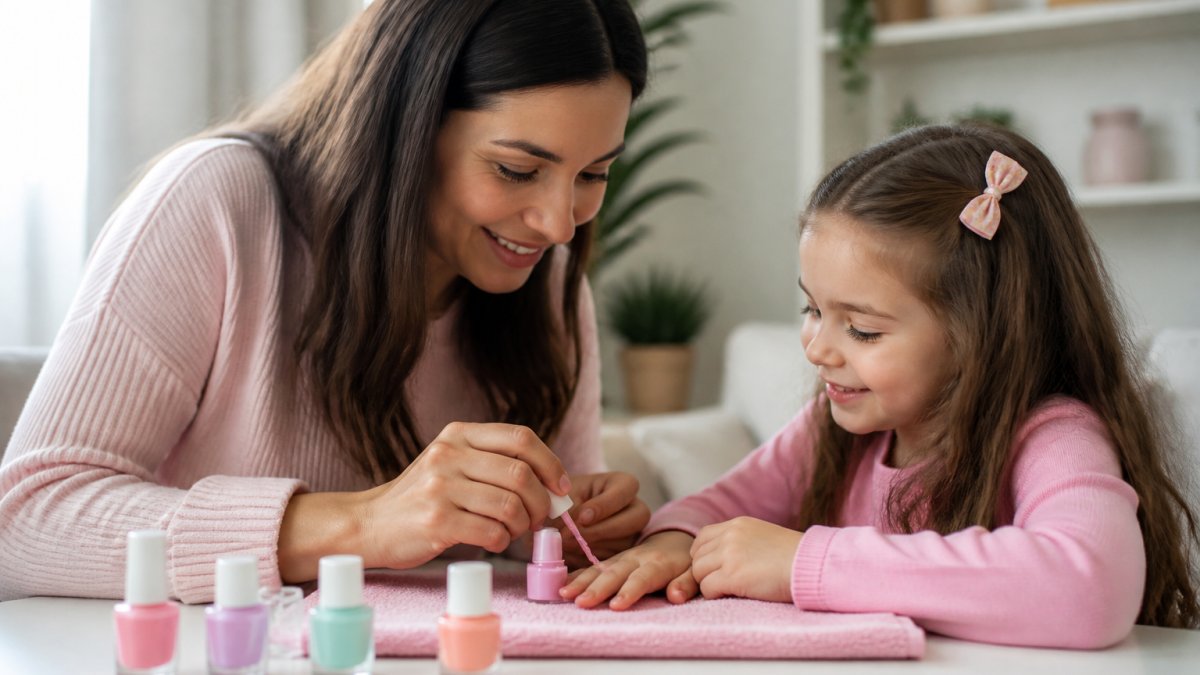
Watch out: even child-friendly polish should never go near the mouth or eyes, and a patch test on one nail is worth the two minutes. Little Rituals uses clean, non-toxic, breathable formulas for exactly this reason, and our professional (KHDA certified) staff are trained to work patiently with small hands.
How Long Does Peel-Off Nail Polish Last?
Peel-off nail polish typically lasts two to five days on fingernails and longer on toenails, depending on preparation and daily activity. That range is realistic, not a marketing promise. Several factors push you toward the shorter end:
- Nail preparation: oils or lotion left on the plate stop the film bonding
- Layer thickness: one thin coat lifts early; two or three coats hold better
- Water exposure: long baths and washing up soften the film
- Base coat: a dedicated peel-off base coat improves adhesion and makes removal cleaner
Toenails, shielded from constant wear, routinely stretch to a week or more.
Does Peel-Off Nail Polish Damage Nails?
Does peel-off nail polish damage nails? The honest answer depends on which product you peel and how you peel it, and that distinction is where most articles stop short.
Purpose-made peel-off film: the formula is engineered to release from the nail plate with light lateral pressure. Used as directed, it sits on the surface and lifts away without tearing the keratin layers underneath. Most practitioners find the plate looks unchanged after removal, provided the film was fully dry and lifted slowly.
Forcibly peeling conventional or gel polish: this is the damage case. Conventional lacquer and gel bond hard to the plate, and ripping them off takes surface keratin with them. The result is white patches, thinning, and a rougher plate that holds the next manicure less well. The instinct to pick at a lifting edge is the same in both cases, but only one product is designed to survive it.
The Mechanism, Stated Plainly
Nail damage from removal comes from three forces: solvent stripping, mechanical abrasion, and lateral tearing. Acetone removal addresses the first; buffing addresses the second; impatient peeling addresses the third. A purpose-made peel-off film avoids all three by design. A conventional polish peeled by hand triggers the third force directly.
Who Should and Should Not Use It
Peel-off polish suits most healthy nails, but it is not the right choice for everyone:
- Brittle or damaged nails: the film is gentle, but frequent lifting can still stress a plate that is already thin. Space applications out and use cuticle oil between wears.
- Nails that peel or flake naturally: a film that lifts can encourage picking. Consider a treatment base coat first.
- Sensitive skin around the nail: water-based formulas are usually better tolerated, but patch-test one nail before a full manicure.
- Anyone wanting two-week wear: the short wear time leads to more frequent removal, and more frequent removal is more chances to pick. Long-wear lacquer may suit better.
- Children: thin, soft plates benefit most from a solvent-free removal, provided an adult supervises and the polish stays away from mouth and eyes.
What to Check on the Label
"Water-based" is not a safety guarantee. Look for a formula described as breathable and intended for peel-off removal, and avoid products that claim long wear and peel-off release at the same time, those goals conflict, and the film usually fails at one of them. The method, not the marketing, decides the outcome.
How to Remove Peel-Off Nail Polish Safely
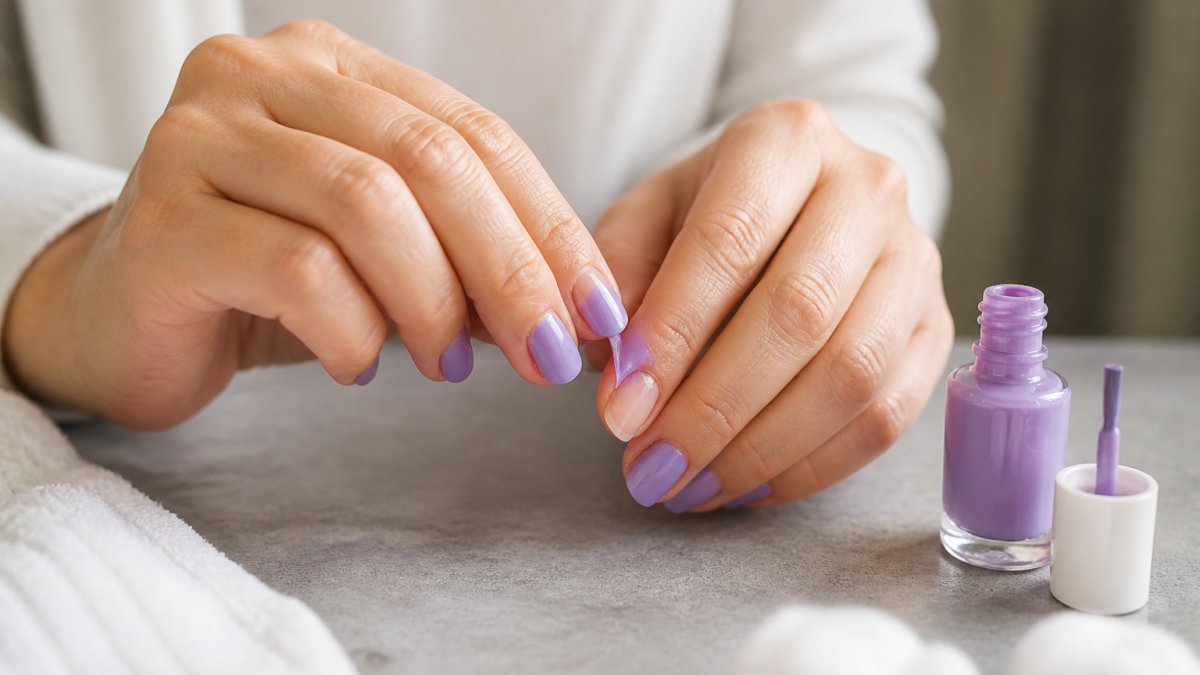
Learning how to remove peel-off nail polish takes one minute. Start at a corner and work a fingernail gently under the edge. Lift slowly along the nail, letting the film release in one piece. If it resists, stop: soak your hands in warm water for a minute, dry them, and try again.
A few habits keep removal clean:
- Never rip the film upward in one sharp motion
- Remove after a bath, when the film is softest
- Apply a cuticle oil afterwards to keep the nail plate supple
- Wait until the polish has fully dried before attempting removal
- Store bottles capped and upright so the formula stays smooth
| Situation | Likely Cause | Fix |
|---|---|---|
| Polish lifts within a day | Oily nail plate | Wipe nails before applying |
| Film cracks instead of peeling | Too many thick layers | Apply two thin coats |
| Removal feels stuck | Polish not fully dry | Warm water soak, then lift |
| Nails look dry after removal | Skipped aftercare | Massage in cuticle oil |
| Colour fades unevenly | Water exposure | Reapply a top coat mid-week |
Frequently Asked Questions
What are the benefits of peel-off nail polish?
Peel-off nail polish offers several practical benefits: it removes without acetone, reducing exposure to harsh solvents; it's ideal for temporary color changes and short-term wear; and water-based formulas are gentler on nails. For busy parents, it means quick, fuss-free removal at home. Many peel-off polishes also avoid strong odors, making them more pleasant for indoor use. These advantages make peel-off polish a convenient choice for adults and a safer option for children.
Is peel-off nail polish safer for children?
Yes, peel-off nail polish is generally safer for children because most formulas are water-based and free from acetone, toluene, and formaldehyde. These gentle ingredients reduce the risk of irritation and strong fumes. However, always check the label for non-toxic certifications and do a patch test on a small area first. Adult supervision is still needed during application and removal to avoid ingestion or eye contact. For a truly safe experience, choose professional-grade kid-friendly polishes.
How do you remove peel-off nail polish?
To remove peel-off nail polish, start at the edge of the nail and gently lift the polish with your fingernail or a cuticle stick. Peel it off in one piece if possible, working slowly to avoid nail plate damage. If the polish resists, soak your fingertips in warm soapy water for a minute to loosen the bond, then try again. Never force or scrape aggressively. For stubborn bits, a quick wipe with a gentle acetone-free remover can help. Always wash hands and moisturize after removal.
Does peel-off nail polish damage nails?
Peel-off nail polish is designed to be gentle, but improper removal can cause damage. Peeling off regular polish or forcing a peel-off polish that isn't ready can strip surface layers of the nail plate, leading to weak or brittle nails. To minimize risk, use a dedicated peel-off base coat, wait for the polish to lift naturally, and never pick at it. Water-based formulas are less drying than traditional polish. When used correctly, peel-off polish is a low-damage option for temporary color.
Ritual matters more than polish. If you want a manicure that fits around family life, without acetone or a salon queue, Little Rituals brings clean, non-toxic nail care to your door, with gentle water-based peel-off polish for children, patient KHDA certified technicians, and a Mama + Me experience built for real bonding. Get started with Little Rituals and turn nail care into a ritual your family looks forward to.
What are the benefits of peel-off nail polish?
Peel-off nail polish offers several practical benefits: it removes without acetone, reducing exposure to harsh solvents; it's ideal for temporary color changes and short-term wear; and water-based formulas are gentler on nails. For busy parents, it means quick, fuss-free removal at home. Many peel-off polishes also avoid strong odors, making them more pleasant for indoor use. These advantages make peel-off polish a convenient choice for adults and a safer option for children.
Is peel-off nail polish safer for children?
Yes, peel-off nail polish is generally safer for children because most formulas are water-based and free from acetone, toluene, and formaldehyde. These gentle ingredients reduce the risk of irritation and strong fumes. However, always check the label for non-toxic certifications and do a patch test on a small area first. Adult supervision is still needed during application and removal to avoid ingestion or eye contact. For a truly safe experience, choose professional-grade kid-friendly polishes.
How do you remove peel-off nail polish?
To remove peel-off nail polish, start at the edge of the nail and gently lift the polish with your fingernail or a cuticle stick. Peel it off in one piece if possible, working slowly to avoid nail plate damage. If the polish resists, soak your fingertips in warm soapy water for a minute to loosen the bond, then try again. Never force or scrape aggressively. For stubborn bits, a quick wipe with a gentle acetone-free remover can help. Always wash hands and moisturize after removal.
Does peel-off nail polish damage nails?
Peel-off nail polish is designed to be gentle, but improper removal can cause damage. Peeling off regular polish or forcing a peel-off polish that isn't ready can strip surface layers of the nail plate, leading to weak or brittle nails. To minimize risk, use a dedicated peel-off base coat, wait for the polish to lift naturally, and never pick at it. Water-based formulas are less drying than traditional polish. When used correctly, peel-off polish is a low-damage option for temporary color.